There’s a quiet confidence to a skincare bottle that looks the part—and looks after your product, too. If your formula flinches at light, you don’t just need packaging: you need protection.
There’s a quiet confidence to a skincare bottle that looks the part—and looks after your product, too. If your formula flinches at light, you don’t just need packaging: you need protection. In this deep dive, we’ll explore how custom glass colors don’t just look good—they shield, preserve, and let your brand stand out with sophistication.
When light kills efficacy, your choice of glass becomes your shield.
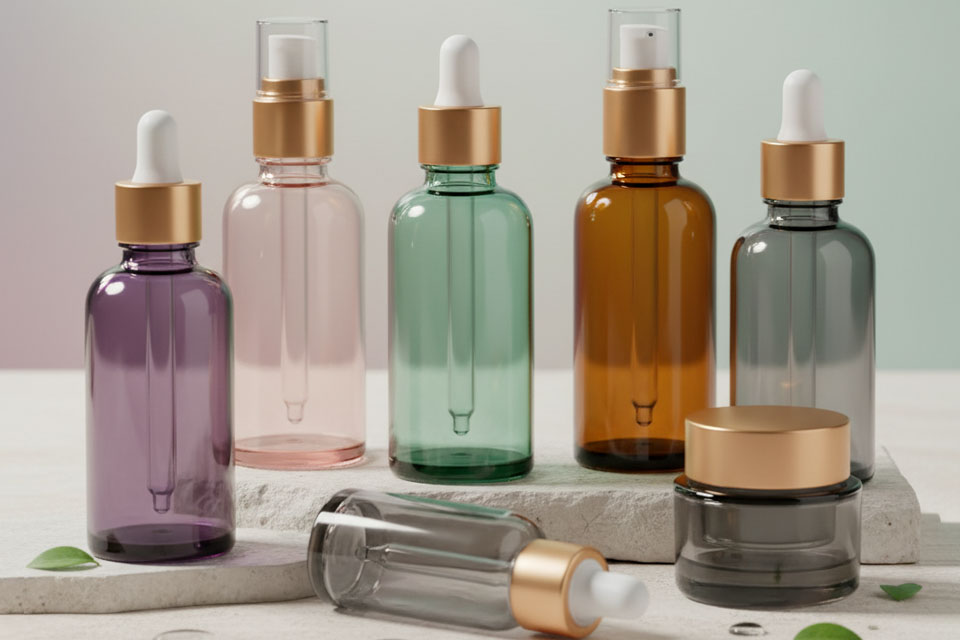
Amber glass is the trusted workhorse. By infusing iron, carbon, and sulfur into the mix, amber jars absorb UV and blue light up to about 450 nm. It’s the go-to for sensitive essentials—from serums to tinctures—guarding potency and helping products stay true.
:contentReference[oaicite:0]{index=0}
This deep violet or near-black glass looks mysterious—and acts decisively. It blocks nearly all visible light, while thoughtfully allowing beneficial UV-A and infrared rays. This kind of protection is rare, complex to make, and feels premium.
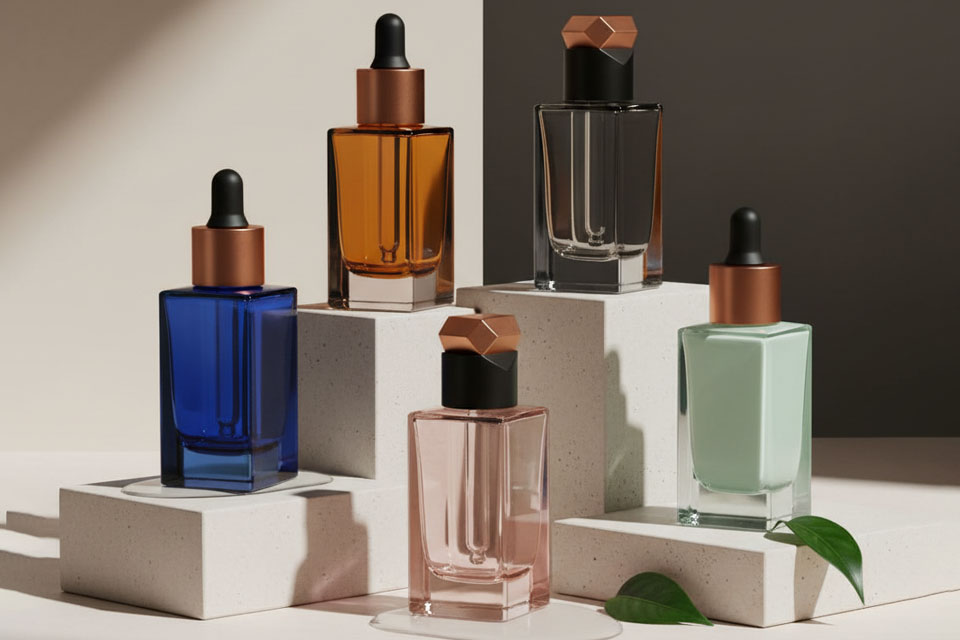
Cobalt blue offers moderate UV defense—with flair. The distinctive hue makes your bottle pop on shelves while offering more protection than clear glass. Just not quite as much as amber.
:contentReference[oaicite:1]{index=1}
Green bottles look classic, but offer minimal UV defense. They’re chosen more for brand story than science. Use with care—or mostly for looks.
If you want full transparency of product, flint glass delivers. But visible elegance comes at a cost—almost zero protection from damaging light. Best avoided for light-sensitive skincare.
Every ingredient reacts differently to light. Here’s how you match glass to your product’s needs.
Start by figuring out which light wavelengths—UV, blue, or even yellow—damage your ingredients. Chemistry (and a lab) will tell.
Manufacturers can tweak glass recipes—mixing in metals or minerals—to absorb exactly the right wavelengths for your product.
Want extra defense without sacrificing clarity? Extras like low-E coatings reflect heat and UV while preserving visibility. Laminated glass pairs layers for up to 99% UV blockage.
Colored glass is your foundation. To ward off every threat, go beyond:
| Glass Type | UV Protection Level | Best For |
|---|---|---|
| Amber Glass | High (up to 450 nm) | Everyday skincare and essentials |
| UV (Biophotonic) | Near-total visible light block | Premium, ultra-sensitive formulations |
| Cobalt Blue | Moderate | Aesthetic-first, some light defense |
| Green Glass | Low | Brand-driven packaging, not protection |
| Clear Glass | None | Visible-only displays; non-sensitive uses |
Protecting your formulation isn’t just chemistry—it’s brand integrity. The right glass can preserve efficacy, elevate perception, and tell your sustainability story. Whether you choose amber’s trusted shield, biophotonic’s premium embrace, or cobalt’s visual pop, design meets defense when you pair science with style.
